Hardwood Flooring Installation & Replacement in Forest Lake, MN
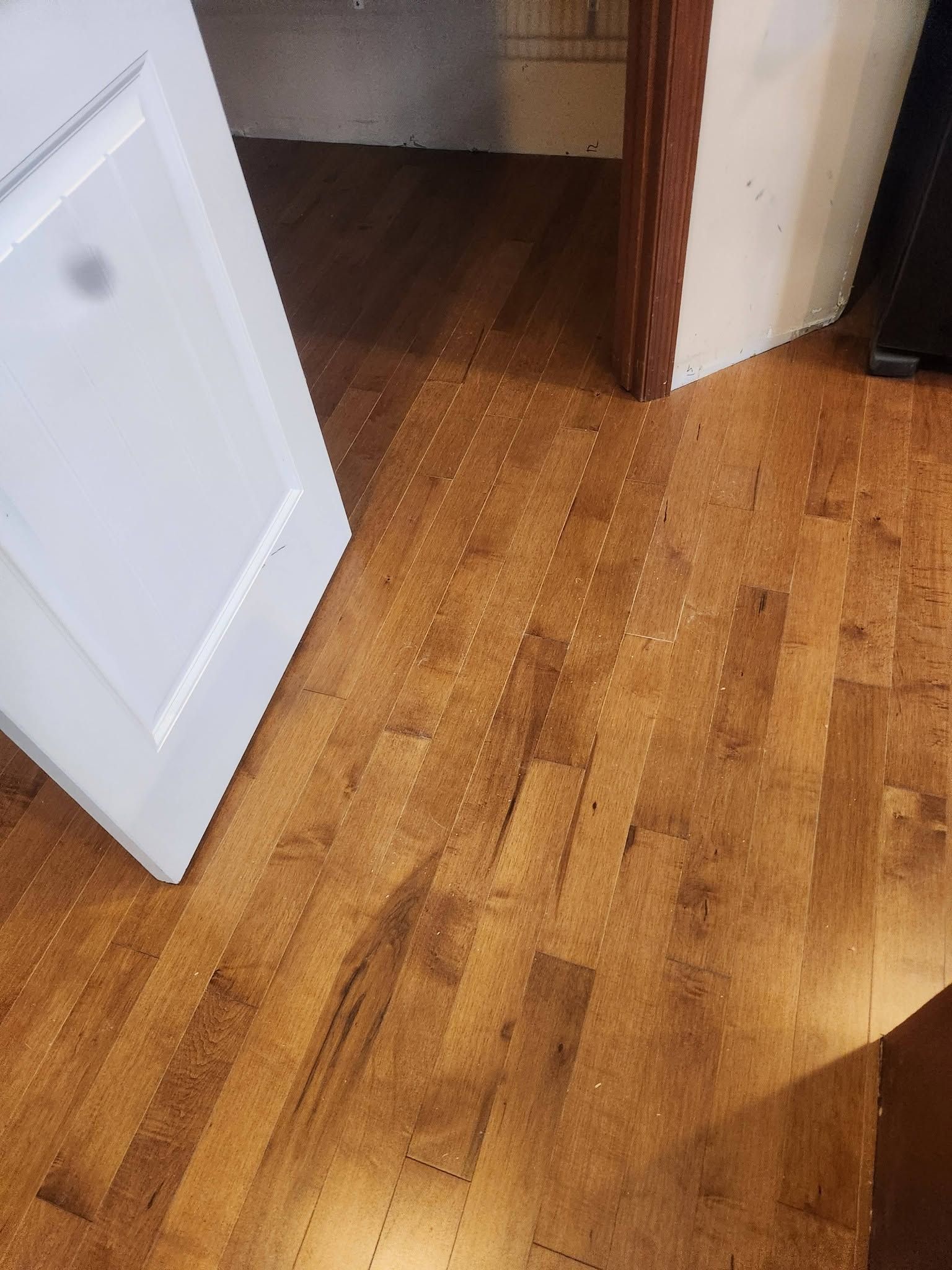
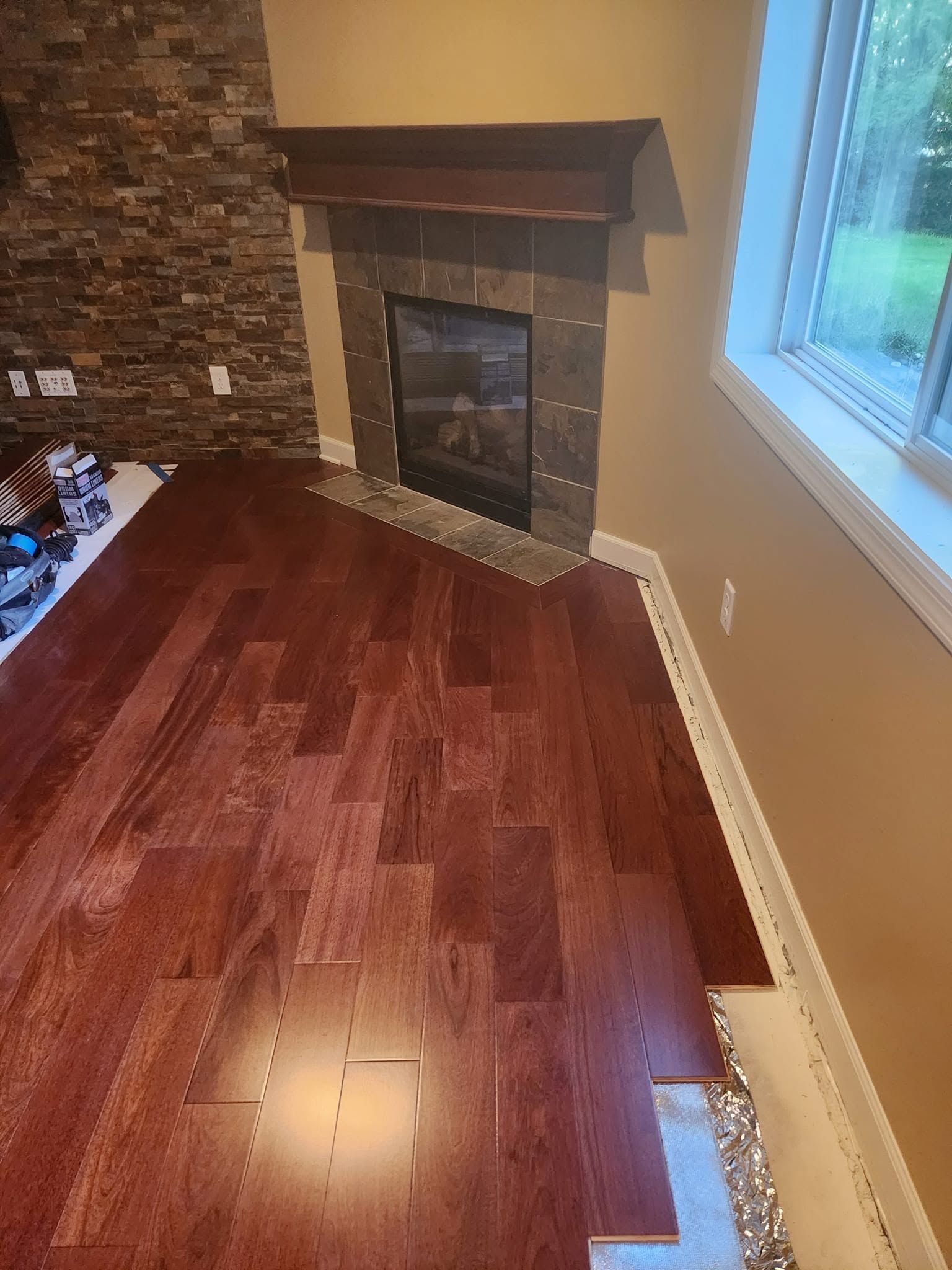
Natural Floors That Age With Grace
In a Minnesota winter, indoor relative humidity can fall below 25% once the furnace runs, and solid hardwood that was not given time to adjust will shrink and gap. Surface Flooring installs and replaces solid and engineered hardwood across Forest Lake, Minnesota, and the surrounding Washington County area, pairing careful acclimation and moisture testing with clean, exact board work. We help you choose species and finishes suited to how your rooms are used and how our climate behaves through the year.
Our approach starts beneath the surface, with a subfloor checked for flatness and moisture before a single board goes down. With a combined 45+ years behind us, we match the installation method (nail-down, glue-down, or floating) to your home and your material, then finish the detail work at stairs, thresholds, and transitions so the result looks intentional. When you are planning new floors or replacing worn ones, send us your project details for a straight assessment.
Hardwood Flooring Services in Forest Lake, Minnesota
Solid Hardwood Installation
Classic solid planks installed with correct acclimation, fastening, and expansion spacing. Seasonal movement is accounted for so the floor stays tight and flat, delivering the depth and longevity that only full-thickness wood can offer a home over many years of use.
Engineered Hardwood Installation
Layered engineered planks that resist Minnesota's dramatic humidity swings better than solid wood. Ideal over concrete or in lower levels, they give you real wood on top with added dimensional stability underneath, installed to manufacturer and regional standards.
Hardwood Floor Replacement
Worn, damaged, or dated hardwood removed and replaced with minimal mess. The subfloor is assessed during tear-out, any hidden issues are corrected, and the new boards are laid on a clean, sound base so the fresh floor performs from day one.
Subfloor Preparation & Moisture Testing
A floor is only as good as what sits beneath it. High spots are leveled, loose areas are secured, and a moisture meter is run on both subfloor and wood, confirming readings sit within accepted limits before the first board is installed.
Prefinished Plank Installation
Factory-finished boards that arrive sealed and ready, cutting dust and curing time in your home. Boards are laid with tight, even seams and precise cuts, giving you a durable, consistent surface you can walk on almost as soon as the work wraps.
Stair & Transition Work
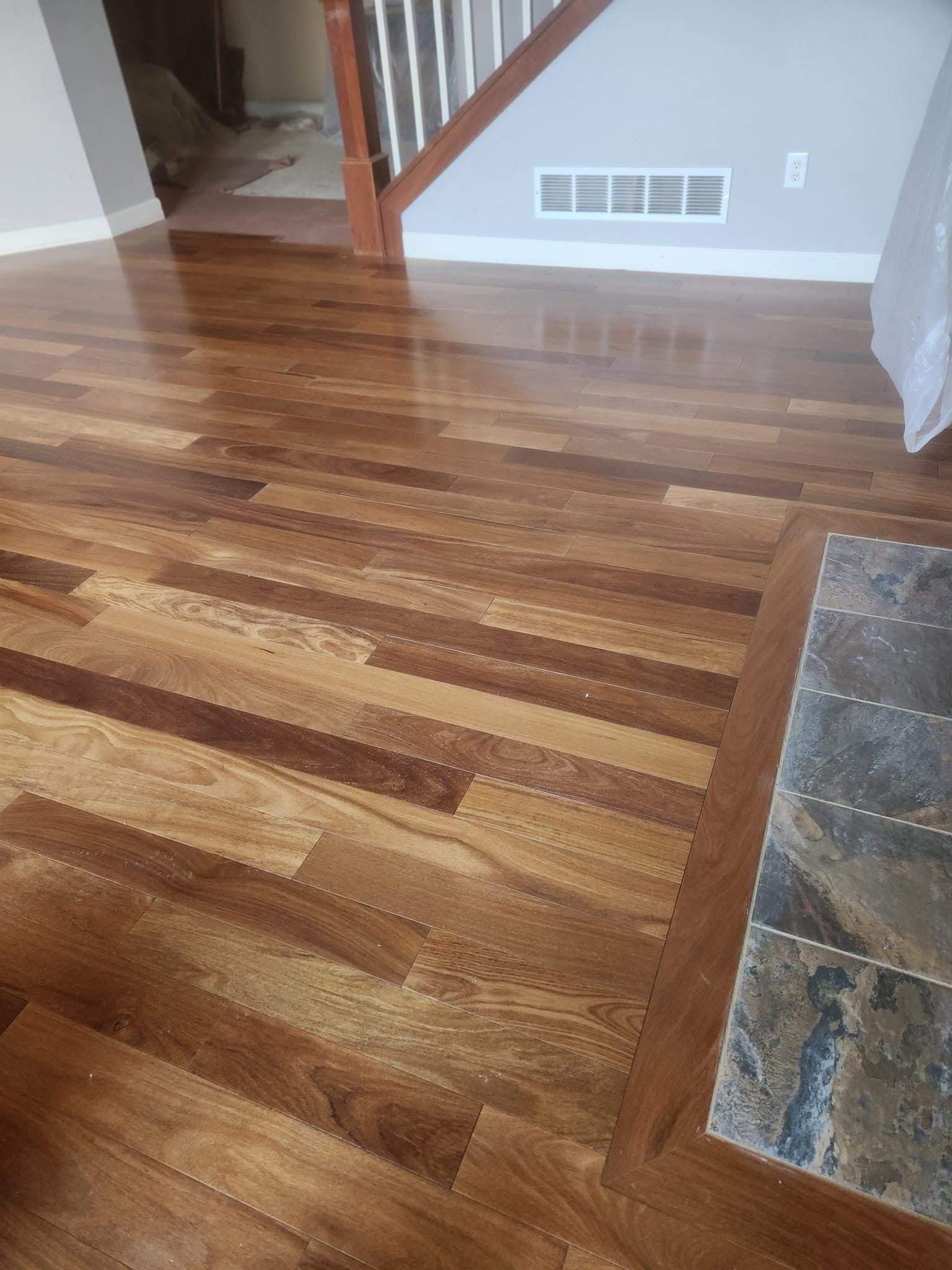
The details that make a floor feel finished. Stair treads, nosings, and clean thresholds between rooms and materials are crafted with care, so height changes and doorways look deliberate rather than patched together as an afterthought once the main floor is set.
The Case for a Hardwood Floor
Lasting Property Value
Few upgrades return value like real wood. Buyers recognize and reward a well-laid hardwood floor, so your investment keeps paying back in appeal and resale long after the initial cost has faded from memory, making it a sound long-term investment.
Timeless, Natural Character
No two boards are identical, and that genuine, living grain brings a warmth no imitation fully matches. Hardwood anchors a room with a look that stays in style across many decades and suits everything from historic homes to modern builds.
Refinishable for Decades
When the finish eventually dulls or scratches, solid wood can be sanded and recoated rather than torn out. That ability to renew the same floor several times is why hardwood so often outlasts the people who chose it.
Everyday Warmth and Comfort
Wood feels warmer and more inviting underfoot than tile or stone, especially through a long northern winter. It brings a natural comfort to the spaces where your family gathers, works, and moves through the day, taking the hard chill off cold winter mornings.
Built for Seasonal Movement
Installed correctly, with acclimation and expansion space, hardwood expands and contracts without damage as indoor humidity shifts. The right preparation turns Minnesota's climate from a threat into something the floor simply takes in stride, season after season, year after year.
Simple, Honest Upkeep
Hardwood asks little beyond regular sweeping, prompt spill cleanup, and the occasional recoat. There is no grout to scrub or seams to chase, just a straightforward routine that keeps the surface looking rich and warm with only modest, occasional effort on your part.
Build a Floor Worth Passing Down
A hardwood floor laid with patience becomes part of a home's story, gaining character as the years and footsteps accumulate. Surface Flooring brings 45+ years of combined experience to every installation and replacement in Forest Lake, Minnesota, from the moisture reading at the start to the final transition piece. We would rather take the time to do it right than rush a floor that has to last decades. Tell us about your rooms, your subfloor, and the finish you want, and together we will map out a hardwood project built to stand up to real Minnesota living. Contact us whenever you are ready.
Frequently Asked Questions
How long does hardwood need to acclimate before installation in a Minnesota winter?
Solid hardwood usually needs 7 to 14 days inside your home, while engineered planks often settle in 3 to 5. The wood is acclimated in the actual room where it will live, not in a garage.
Should I choose solid or engineered hardwood for this climate?
Engineered hardwood generally handles Minnesota's humidity swings with less movement and works well over concrete or in lower levels. Solid wood offers maximum refinishing life for above-grade rooms. Recommendations are based on the specific room, subfloor, and how you live.
Which wood species hold up best in this region?
Red and white oak are regional workhorses, widely available, stable, and forgiving of Minnesota humidity shifts. Maple and hickory add hardness for busy households. In Forest Lake, Minnesota, oak is most often the recommended choice for the balance it strikes.
Why do small gaps appear between boards in winter, and are they a defect?
Usually not. As dry furnace air pulls moisture from the wood, boards shrink slightly and thin seasonal gaps open, then close again in humid months. Proper acclimation keeps this movement minor and well within what a healthy floor should do.
How are transitions handled between hardwood and adjoining rooms' flooring?
Thresholds, reducers, or T-moldings sized to the height difference are used, creating a clean, deliberate break where materials meet. The goal is a smooth step between rooms that looks planned, protects both floor edges, and feels natural underfoot.
What is the difference between nail-down, glue-down, and floating installation?
Nail-down fastens solid wood to a wood subfloor, glue-down bonds planks directly to concrete and also helps quiet the floor, and floating locks boards together over an underlayment. The right method depends on your material, subfloor, and the level of the room.
Is hardwood a good choice for kitchens, or is another floor smarter there?
Hardwood can work in a kitchen with prompt spill cleanup and the right finish, though standing water is always its enemy. For heavy splashing or below-grade kitchens, a waterproof material often serves better, and the team will say so plainly.
What is the difference between prefinished and site-finished hardwood?
Prefinished boards arrive sealed from the factory, so installation is faster and nearly dust-free. Site-finished floors are sanded and coated in place, allowing custom stain and a seamless surface. Each has merits, and the choice is matched to your priorities.
What our customers have to say...
Testimonials